Wired vs Wireless Security Systems: Which Is Right for Your Home?

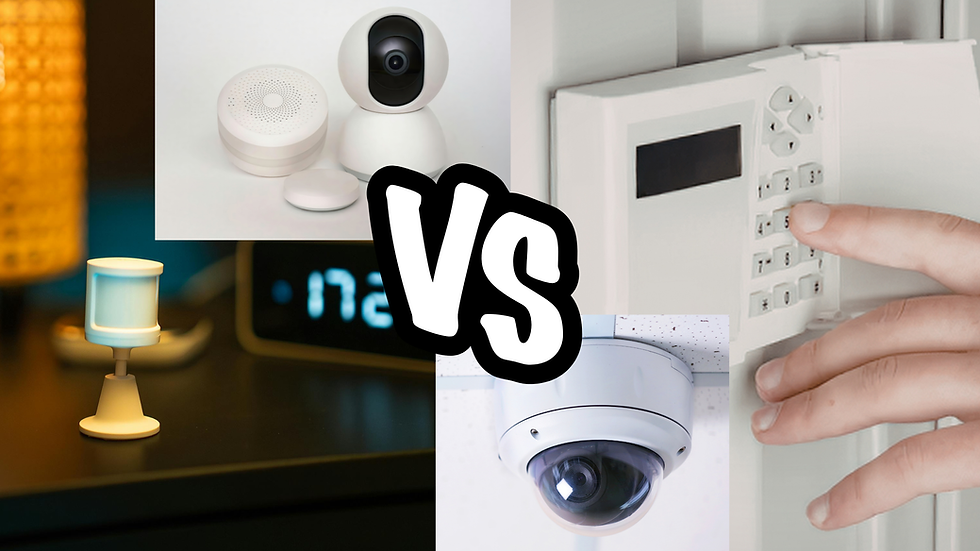
Home security has changed dramatically over the last decade. What used to mean drilling holes, running cables and signing long contracts now often looks very different — smaller devices, smarter detection, and far more flexibility.
If you’re considering a security system, one of the first decisions you’ll face is wired vs wireless. Both have advantages, and the right choice depends on your home, your lifestyle, and how much control you want.
Traditional Wired Security Systems
Wired alarm systems have been around for decades and are still widely used, particularly in older installations and commercial settings.
Strengths
Very stable once installed
No reliance on batteries
Often integrated with monitored alarm services
Limitations
Installation is disruptive (cabling, drilling, decorating)
Changes or extensions are difficult and costly
Typically tied to subscriptions or monitoring contracts
Less flexible for modern lifestyles (home offices, extensions, moving house)
Wired systems can make sense in large properties where cabling is already in place, or where constant professional monitoring is a priority.
Modern Wireless Smart Security Systems
Wireless security has evolved far beyond “basic alarms”. Today’s systems use encrypted communication, local processing, and smart sensors that can detect presence, motion, doors, vibration, and even occupancy patterns.
Key advantages
Non-invasive installation
Wireless systems don’t require chasing walls or lifting floors. Sensors are installed cleanly and discreetly — ideal for finished homes, renovations, or rented properties.
Flexibility as your home changes
Add a sensor. Move a camera. Change how rooms are used. Wireless systems adapt as your life does, without re-wiring.
Smarter detection, fewer false alarms
Modern presence and motion sensors are far more intelligent than traditional PIRs. They can distinguish between people, pets, and background movement, reducing false alerts.
Local control, no mandatory subscriptions
Many modern wireless systems operate locally rather than relying on third-party monitoring centres. This means:
No forced monthly fees
Faster response inside the home
Greater privacy and ownership
Integration with the rest of your smart home
Wireless security no longer stands alone. Lighting, cameras, doorbells, notifications, and automation can all work together — for example:
Lights turning on when motion is detected
Cameras recording only when someone is present
Silent alerts at night instead of alarms
Reliability: the common concern
One of the biggest myths about wireless security is reliability.
Modern systems use:
Encrypted protocols
Mesh networking
Battery backups
Offline-capable hubs
When designed properly, they are extremely reliable — and often more resilient than older wired systems that rely on a single control panel and phone line.
So which should you choose?
There’s no single “best” system for everyone.
Wired systems suit static environments and traditional alarm models.
Wireless smart systems suit modern homes, evolving lifestyles, and homeowners who value flexibility, control, and transparency.
The key difference today isn’t wired vs wireless — it’s locked-in vs adaptable.
A final thought
Security works best when it fits your home and how you actually live in it.
If you’re exploring modern wireless security and want a system that:
Doesn’t lock you into subscriptions
Integrates with your wider smart home
Is designed cleanly, not bolted on
…then it’s worth speaking to someone who specialises in doing this properly from day one.
Thinking about smart security for your home?
At Smartstart, we design wireless smart security systems that are reliable, private, and subscription-free — without unnecessary complexity.
Get in touch for a no-pressure chat about what would actually work in your home.
If you’re exploring smart home security in Surrey or Sussex, we’ve created three clear packages to simplify your decision-making process:
Inside, you’ll find:
Each package is designed to offer increasing levels of protection without unnecessary complexity.


Comments